National Post UK
Threadneedle Street Braces for Inflation Fight as Rate Hike Looms

Markets anticipate a 25 basis point increase on Thursday as the Monetary Policy Committee confronts the resurgence of en

The National Post

HomeFinance
Finance

Threadneedle Street Braces for Inflation Fight as Rate Hike Looms

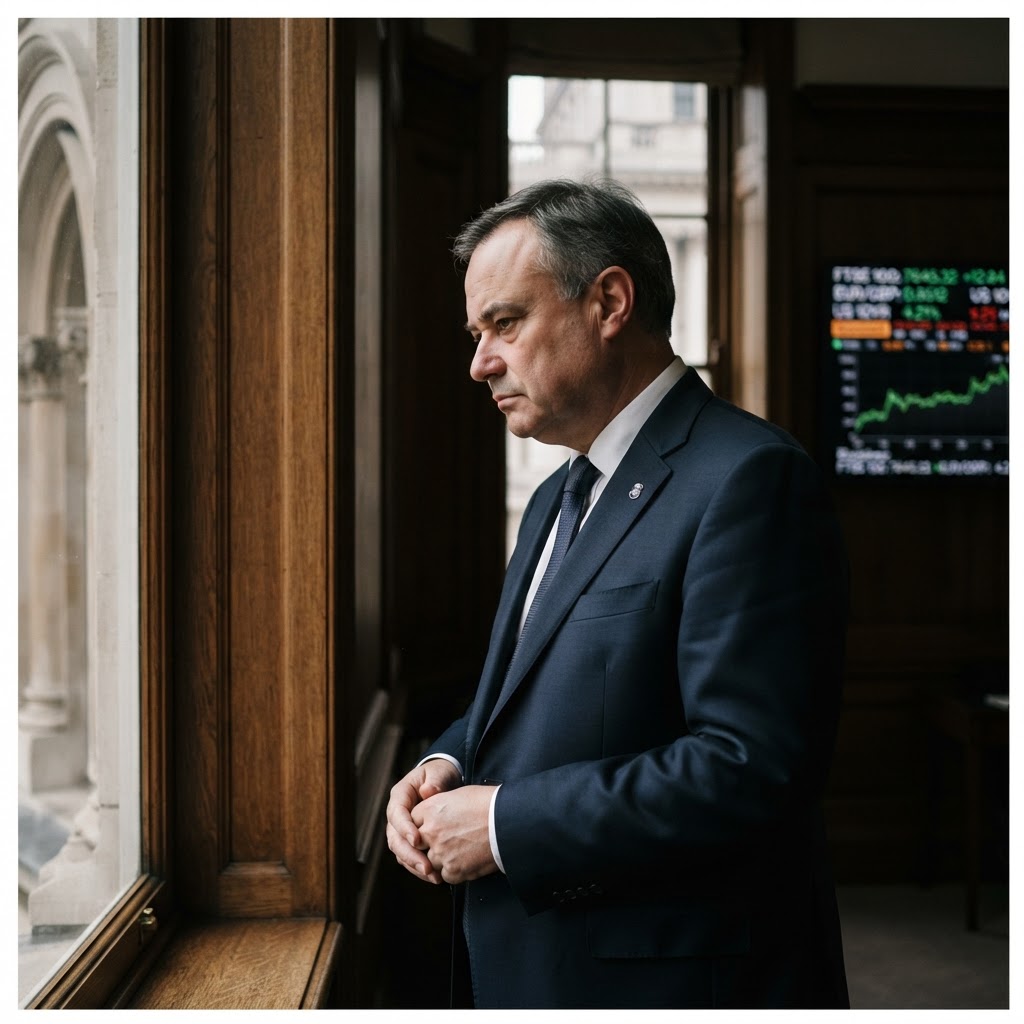
Markets anticipate a 25 basis point increase on Thursday as the Monetary Policy Committee confronts the resurgence of energy-driven price volatility. With mortgage rates already drifting upwards, the Bank of England faces a delicate balancing act to contain inflation without stifling the broader economic recovery.

CW

Charlotte Webb

Finance Correspondent

Published 3 November 2026·about 4 hours ago 3 min read
Text
Share

The Policy Pivot As the Monetary Policy Committee (MPC) prepares for its pivotal meeting on November 5, the mood within the City of London has shifted from expectant caution to near-certainty. For the first time since August 2023, the Bank of England is widely expected to lift the Bank Rate, moving it from its current position of 3.75 per cent to 4 per cent. This decision, while telegraphed in recent policy rhetoric, represents a significant turning point in the post-pandemic economic landscape.

The Energy Imperative The primary driver for this hawkish shift remains the stubborn persistence of inflation, exacerbated by a renewed surge in global energy costs. Despite various fiscal interventions over the past year, the underlying pressure on household budgets and industrial input costs has proved more durable than the Bank had initially forecast. The MPC is now tasked with navigating a narrow path: failing to act could lead to an entrenchment of inflationary expectations, while acting too aggressively risks cooling a fragile recovery before it has fully regained its momentum.

Market Anticipation and Mortgage Impact The financial markets have already priced in the 25 basis point hike, but the real-world implications are being felt most acutely in the mortgage market. Commercial lenders, operating with characteristic foresight, have begun adjusting their fixed-rate offerings in anticipation of Thursday's announcement. For millions of UK homeowners, this represents a tangible tightening of financial conditions, as the era of ultra-low borrowing costs continues to recede into history.

A Divided Outlook The central question facing analysts is whether this hike marks the inauguration of a sustained cycle of monetary tightening or remains a solitary adjustment designed to signal the Bank's commitment to its 2 per cent mandate. Economists remain deeply divided. Proponents of further hikes point to the tight labour market and the potential for a wage-price spiral, while those urging caution emphasise the decelerating growth figures in manufacturing and retail sectors. The language deployed by Governor Andrew Bailey in his subsequent press conference will be scrutinised with forensic intensity to discern the MPC's tolerance for further volatility.

The Road Ahead As the committee convenes, the broader political and economic climate is one of profound uncertainty. The interplay between energy prices, supply chain friction, and the Bank’s own policy tools creates a complex tapestry that defies simple forecasting. Ultimately, the decision on November 5 is not merely about a percentage point shift in the base rate; it is a statement of intent regarding the Bank of England’s readiness to defend the purchasing power of the pound in an increasingly volatile global environment.

TopicsBank of EnglandInterest RatesInflationUK EconomyMonetary PolicyFinance
Share

About the Author

CW

Charlotte Webb

Finance Correspondent

Charlotte Webb reports for National Post UK with a focus on rigorous analysis and authoritative journalism — a trusted voice across British public life.

Reader Discussion · 5

Subscribers can join the conversation.

SUBSCRIBE TO COMMENT →
M
Marcus Sterling3 Nov

My small business is already finding it tough to borrow for investment purposes. Any further hikes will likely force us to pause our expansion plans until the economic outlook stabilizes.

E
Eleanor Rigby3 Nov

I wonder if higher interest rates will actually do much given that so much of our inflation is driven by global energy prices and supply chains. It seems like a blunt tool for a very complex problem.

D
David Thorne3 Nov

This feels like closing the stable door after the horse has bolted. The MPC should have acted much sooner to curb these price rises before they became so entrenched.

S
Sarah Jenkins3 Nov

Increasing rates might help inflation on paper, but it is just going to squeeze those of us already struggling with mortgage repayments. I am worried about how much more my monthly outgoings are going to climb.

A
Arthur Penhaligon3 Nov

It is about time they took some decisive action to tackle the cost of living. Savers have been punished for far too long while inflation eats away at our pensions.

More from Finance

Most Read in Finance

Morning Briefing

The day's top stories, before 7am

Join 40,000 readers who start their morning with National Post UK.