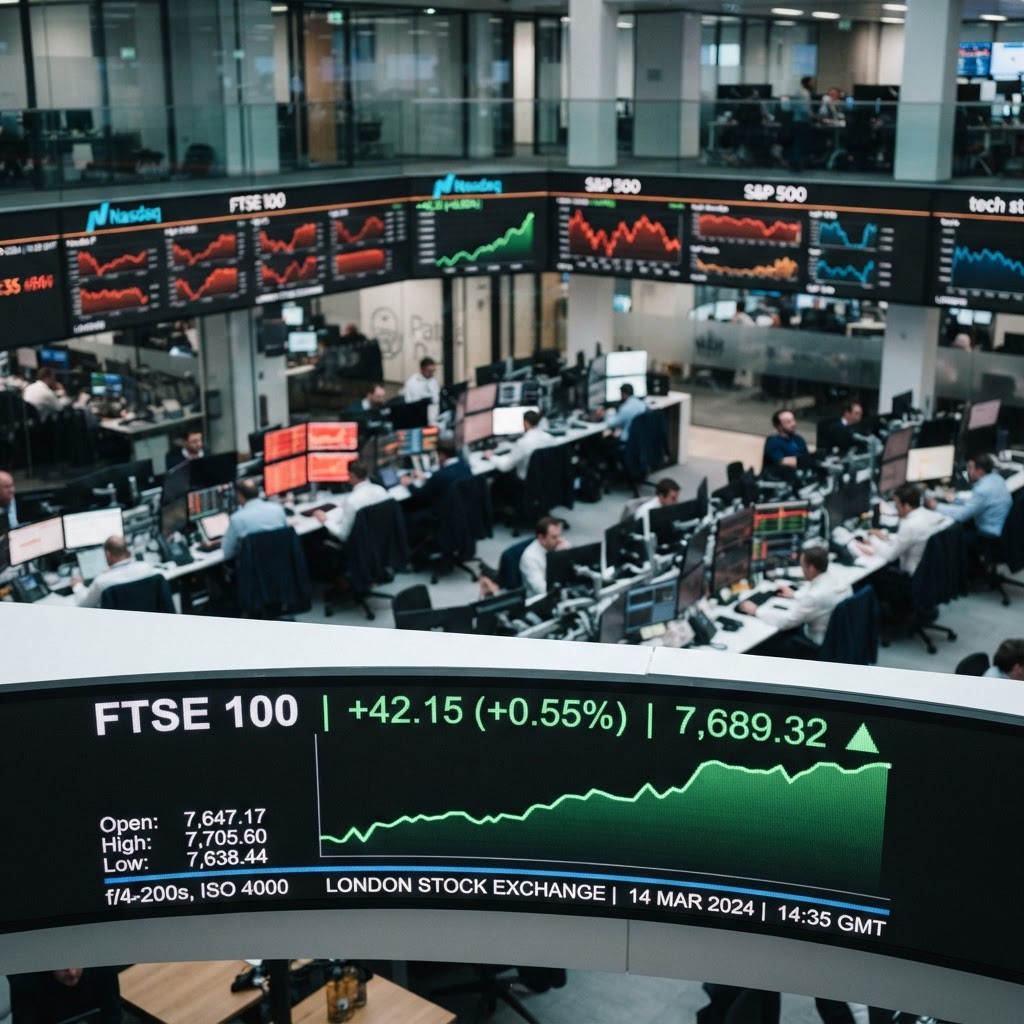
A Landscape of Measured Optimism The London Stock Exchange concluded a turbulent week of trading on 30 October 2026 with a sense of guarded stability. While global markets felt the tremors of a significant sell-off in the technology sector across the Atlantic, the FTSE 100 managed to buck the trend, closing the session with modest but meaningful gains. For market participants in the City, the week has been defined by the delicate task of balancing the fiscal implications of Chancellor John Healey’s maiden Autumn Budget against a macroeconomic backdrop that refuses to yield to easy predictions.
The Shadow of the Autumn Statement Chancellor Healey’s recent unveiling of the 2026 Autumn Budget has remained the primary catalyst for movement across the index. Market analysts suggest that the fiscal measures, which prioritised structural infrastructure spending over populist tax cuts, have provided a degree of clarity that investors initially approached with scepticism. As the dust settles, the prevailing sentiment is one of cautious acceptance. By choosing to hold a steady hand on the tiller, the Treasury has signalled to the international investment community that the United Kingdom remains a jurisdiction of long-term predictability, even if short-term growth prospects remain constrained by persistent productivity challenges.
Dr Eleanor Vance, lead macro-strategist at Sterling Capital, notes that the market’s resilience is as much about what was missing from the Budget as what was included. The avoidance of aggressive, destabilising levies has allowed pension funds and institutional portfolios to maintain their current allocations, preventing the panic-selling that often follows fiscal uncertainty.
Stability in a Volatile World While the tech-heavy indices in New York experienced a sharp correction on Friday, driven by cooling demand for artificial intelligence hardware and profit-taking in the semiconductor space, the FTSE 100 remained largely insulated. This decoupling of London from the tech-fuelled volatility of the Nasdaq is a recurring theme that highlights the structural differences within the British market. The heavy weighting of the FTSE 100 towards defensive sectors, including pharmaceuticals, mining, and energy, provided a natural hedge against the tech-led rout.
AstraZeneca emerged as a notable pillar of strength during the week, with its shares recording significant gains that provided a vital tailwind for the wider index. The company’s continued progress in its R&D pipeline has offered a reliable narrative of growth that stands in stark contrast to the speculative mania seen elsewhere in the global markets.
Central Bank Constraints Beyond the domestic political theatre, the overriding concern remains the trajectory of interest rates. With both the Bank of England and its international counterparts choosing to maintain their current rate stance, investors are looking for any signal that the period of high-cost capital may be nearing its end. The 'higher for longer' narrative, which dominated the discourse for much of the previous eighteen months, is being slowly replaced by an expectation of a prolonged plateau.
This environment is particularly challenging for the banking and retail sectors, both of which are highly sensitive to the cost of borrowing. Yet, as the week drew to a close, there was little evidence of a flight from equities. Instead, investors seem to be adopting a 'wait and see' approach, preferring the dividends offered by the established titans of the FTSE 100 over the high-risk, high-reward profiles of their overseas tech counterparts.
“The decoupling of London from the tech-fuelled volatility of the Nasdaq is a recurring theme that highlights the structural differences within the British market.”