National Post UK
Digital Sentinels: Britain Unveils £300m AI Hub to Counter Synthetic Pathogen Threats

In an era where biological risks are increasingly intertwined with computational capabilities, the UK has opened a pione

The National Post

HomeTechnology
Technology

Digital Sentinels: Britain Unveils £300m AI Hub to Counter Synthetic Pathogen Threats

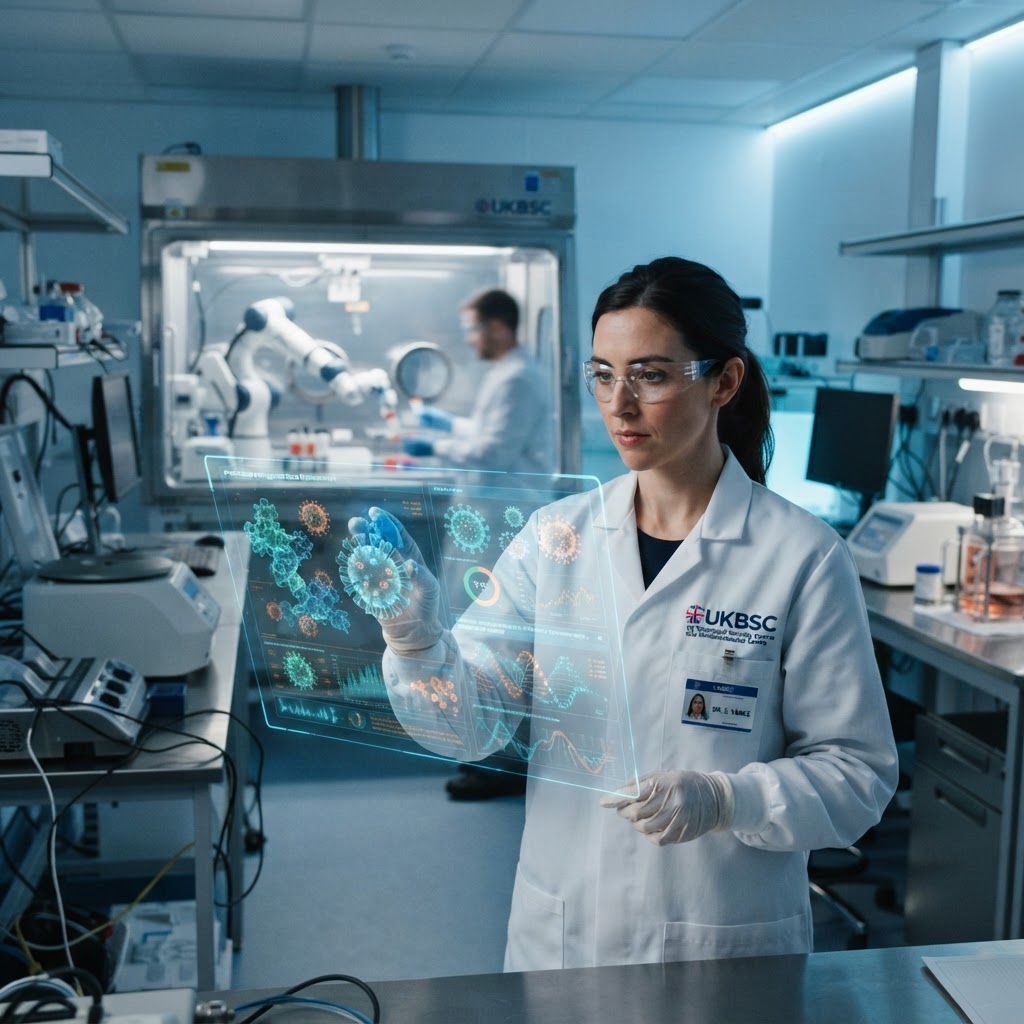
In an era where biological risks are increasingly intertwined with computational capabilities, the UK has opened a pioneering AI biosecurity laboratory. The facility marks a significant shift in national defence, utilising predictive modelling to anticipate and neutralise emerging health hazards before they reach our shores.

JM

Jack Morrison

Technology Editor

Published 27 October 2026·about 3 hours ago 3 min read
Text
Share

A New Frontier in National Defence The landscape of global biosecurity underwent a fundamental shift this week as the United Kingdom inaugurated its first dedicated artificial intelligence laboratory focused exclusively on the mitigation of synthetic biological threats. Backed by an unprecedented £300 million investment package—a strategic synthesis of public funding and private sector venture capital—the centre represents the most ambitious attempt by any sovereign state to integrate frontier AI architectures directly into its national health security apparatus.

Based at a secure, undisclosed location, the laboratory functions as a nerve centre for threat detection. While the COVID-19 pandemic exposed the limitations of traditional, reactive public health infrastructure, this new facility is designed to be inherently proactive. By harnessing machine learning models trained on vast datasets of genomic sequences and epidemiological patterns, the team aims to identify the markers of synthetic pathogens long before they appear in clinical settings.

Collaborating with the Dstl The project is not operating in a vacuum. A critical component of its operational structure is a deep-seated collaboration with the Defence Science and Technology Laboratory (Dstl). This partnership ensures that the lab’s findings are seamlessly integrated into the UK's broader national security framework. The Dstl brings decades of expertise in biological threat analysis, providing a rigorous scientific backbone to the AI’s probabilistic outputs.

Security analysts have long cautioned that the dual-use nature of generative AI—which could theoretically assist in the design of dangerous biological agents—must be countered with AI of equal or greater capability. By positioning the UK at the forefront of this digital arms race, the government is signalling that it views biological stability as a cornerstone of national sovereignty. The facility is not merely monitoring disease; it is building a digital shield against actors who might seek to manipulate biology for malign intent.

Accelerating Countermeasures Beyond threat identification, the lab’s mandate extends to the acceleration of medical countermeasures. Traditional vaccine and antiviral development cycles, while impressive during the pandemic, remain prohibitively slow. The new lab aims to compress these timelines by using AI to simulate protein interactions and molecular responses, allowing for the rapid design of targeted interventions. In the event of a novel outbreak, the goal is to have potential therapeutic candidates ready for testing within days, rather than months.

However, the ethical implications of such power are not being ignored. The government has committed to a framework of ‘responsible innovation’, ensuring that the algorithms developed within the facility are subject to rigorous oversight by both independent scientists and intelligence officials. This balance between capability and accountability is expected to set a global benchmark for how nations handle the convergence of synthetic biology and advanced computation.

“This facility is not merely monitoring disease; it is building a digital shield against actors who might seek to manipulate biology for malign intent.”


An Evolving Threat Environment Critics of the project have pointed to the complexity of the task, noting that biological systems remain notoriously difficult to model with complete accuracy. Yet, the consensus among the scientific community is that the status quo is untenable. As biological research becomes more democratised, the barriers to entry for creating synthetic threats have lowered. The UK’s investment serves as an acknowledgement that our defences must evolve to match the technological capabilities of the 21st century. Whether this £300 million investment will suffice in the long term remains to be seen, but as of today, Britain is better prepared for the next biological inflection point than it has ever been.

TopicsUK NewsArtificial IntelligenceBiosecurityNational SecurityTechnology PolicyDstl
Share

About the Author

JM

Jack Morrison

Technology Editor

Jack Morrison reports for National Post UK with a focus on rigorous analysis and authoritative journalism — a trusted voice across British public life.

Reader Discussion · 6

Subscribers can join the conversation.

SUBSCRIBE TO COMMENT →
J
Joanna Croft27 Oct

It is a sensible move. International cooperation should be the next step, as these threats certainly won't respect national borders.

M
Marcus Sterling27 Oct

Investment in national security is rarely a bad thing, but I would like to see a bit more transparency regarding the oversight of this hub. Who is accountable if these AI systems make a mistake?

E
Eleanor Rigby27 Oct

This sounds like something out of a science fiction novel, yet here we are. It is frightening to think that synthetic pathogens are even a viable threat, but I suppose we have to stay one step ahead.

D
David Thorne27 Oct

As someone working in data science, I can see the potential here, but we must be careful about data privacy and who holds the keys to these algorithms. AI is only as good as the datasets we feed it.

S
Sarah Jenkins27 Oct

£300 million seems like a lot of money when the NHS is struggling to keep up with basic appointments. I find it hard to justify this spend when the benefits aren't immediately tangible to the average person.

A
Arthur Penhaligon27 Oct

About time we took this seriously. Given how quickly technology is advancing, we need to be proactive rather than waiting for the next crisis to hit.

More from Technology

Most Read in Technology

Morning Briefing

The day's top stories, before 7am

Join 40,000 readers who start their morning with National Post UK.