
National Post UK
Market Fragility Returns: The FTSE 100 Stumbles as Autumn Economic Chill Sets In

As the final quarter of 2026 commences, British financial markets are grappling with a toxic combination of cooling busi

The National Post

HomeFinance
Finance

Market Fragility Returns: The FTSE 100 Stumbles as Autumn Economic Chill Sets In

As the final quarter of 2026 commences, British financial markets are grappling with a toxic combination of cooling business sentiment and persistent inflationary pressures. Investors remain cautious as the reality of a constrained economic environment takes hold across the City.

MS

Marcus Stone

Finance Correspondent

Published 6 October 2026·2 days ago 3 min read
Text
Share

The Shadow of Economic Uncertainty The dawn of the fourth quarter has brought little respite for traders in London, as the FTSE 100 finds itself navigating its most treacherous terrain since the spring thaw. The early days of October 2026 have been defined by a sharp retreat in equity valuations, marking the index's most significant weekly decline since April. This latest bout of volatility reflects a broader loss of nerve among institutional investors who had hoped that the cooling of the previous quarter would signal a period of relative calm.

The Weight of Energy and Borrowing Central to the malaise is the persistent squeeze on capital expenditure. Business confidence, which had shown tentative signs of recovery in the summer months, dipped sharply as of 1 October. The primary driver of this renewed pessimism is the relentless escalation of energy and fuel costs. For industrial and retail sectors alike, these overheads are no longer merely a budgetary nuisance; they are rapidly becoming a fundamental barrier to growth and profit margins. As companies struggle to pass these costs onto an already beleaguered consumer, the appetite for new borrowing has slowed to a crawl. The credit markets, often the lifeblood of economic expansion, have tightened significantly, reflecting an underlying fear that the cost of capital may stay elevated for longer than anticipated.

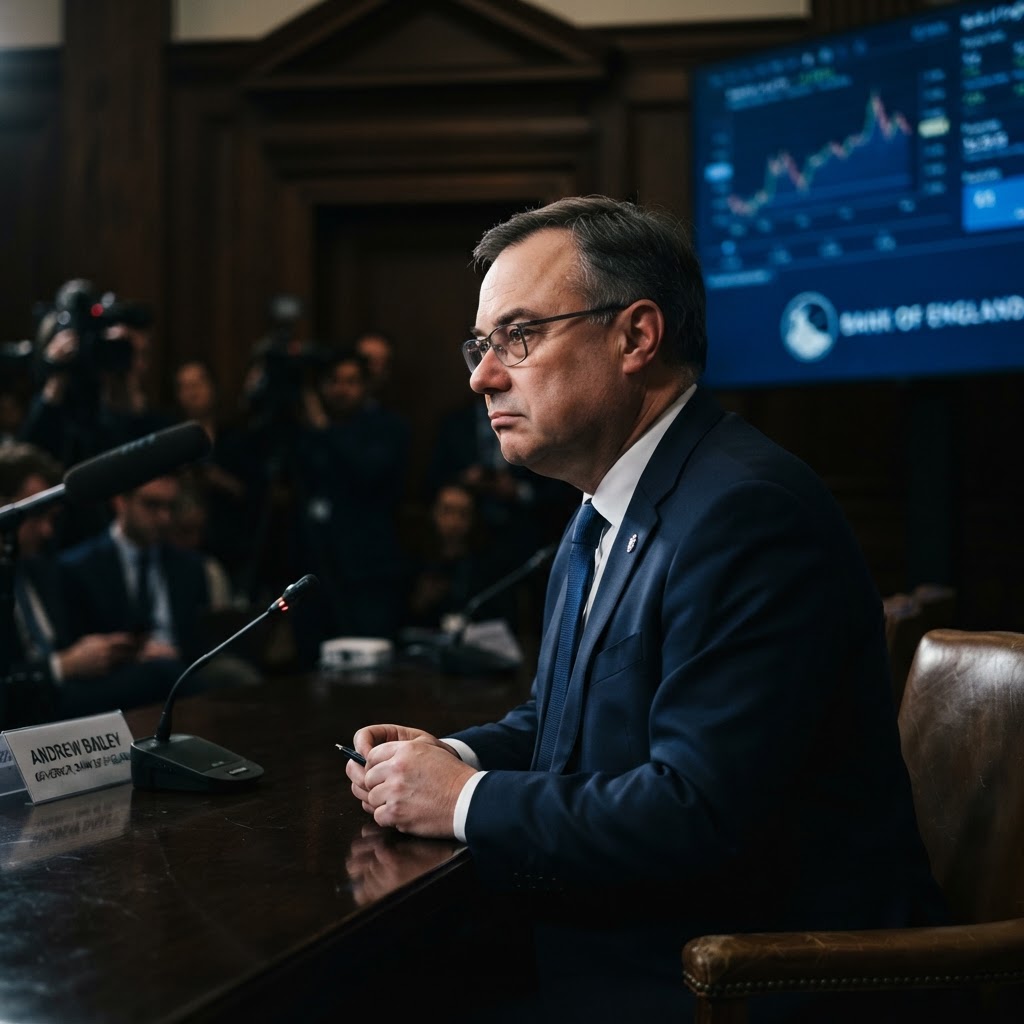
Policy at a Crossroads The spotlight remains firmly fixed on Threadneedle Street. In September 2026, the Bank of England opted to hold interest rates steady at 3.75 per cent, a decision that was received with a mixture of relief and apprehension. While the pause provided a temporary floor for the markets, the Monetary Policy Committee's accompanying language was unmistakably hawkish. Officials have repeatedly signaled that the door remains open for further rate hikes should the persistent threat of inflation fail to subside in line with projections. This leaves the central bank in an unenviable position: attempting to tame a stubborn inflationary pulse without inadvertently choking off the nascent recovery. For the City, this ambiguity regarding future policy trajectories is as detrimental as the rate increases themselves.

Structural Headwinds and Investor Sentiment Beyond the immediate fiscal data, there is a growing consensus among analysts that the UK is facing a structural adjustment period. The bond market rout that rippled through the City in late September acted as a wake-up call, exposing the fragility of valuations in an era of higher base rates. Investors are now recalibrating their expectations, moving away from growth-at-any-price models toward defensive plays that can weather the inflationary storm. This shift in sentiment is not merely confined to the FTSE 100, but is being mirrored across the broader London Stock Exchange, where mid-cap stocks have faced even steeper selling pressure. As we head deeper into the final quarter, the consensus is clear: the era of cheap liquidity has been replaced by a reality defined by risk management and fiscal prudence.

TopicsUK EconomyFTSE 100Bank of EnglandMarket AnalysisBusiness News
Share

About the Author

MS

Marcus Stone

Finance Correspondent

Marcus Stone reports for National Post UK with a focus on rigorous analysis and authoritative journalism — a trusted voice across British public life.

Reader Discussion · 4

Subscribers can join the conversation.

SUBSCRIBE TO COMMENT →
E
Elena Richards6 Oct

I am curious to see if the central bank intervenes before the end of the month. The current climate makes it very difficult for those of us trying to plan for long-term growth in our portfolios.

D
David Thorne6 Oct

This is exactly what happens when business confidence hits rock bottom due to lack of clear direction from Westminster. Small businesses are being squeezed from every angle and the FTSE is just reflecting that misery.

S
Sarah Jenkins6 Oct

While the headline makes it sound dramatic, this is just a standard market correction after a strong summer period. Investors shouldn't be panicking over a few days of red ink on the screens.

A
Arthur Penhaligon6 Oct

It feels like we have been expecting this autumn downturn for months given the persistent inflation figures. I have moved most of my pension pot into gilts until the volatility settles down.

More from Finance

Most Read in Finance

Morning Briefing

The day's top stories, before 7am

Join 40,000 readers who start their morning with National Post UK.