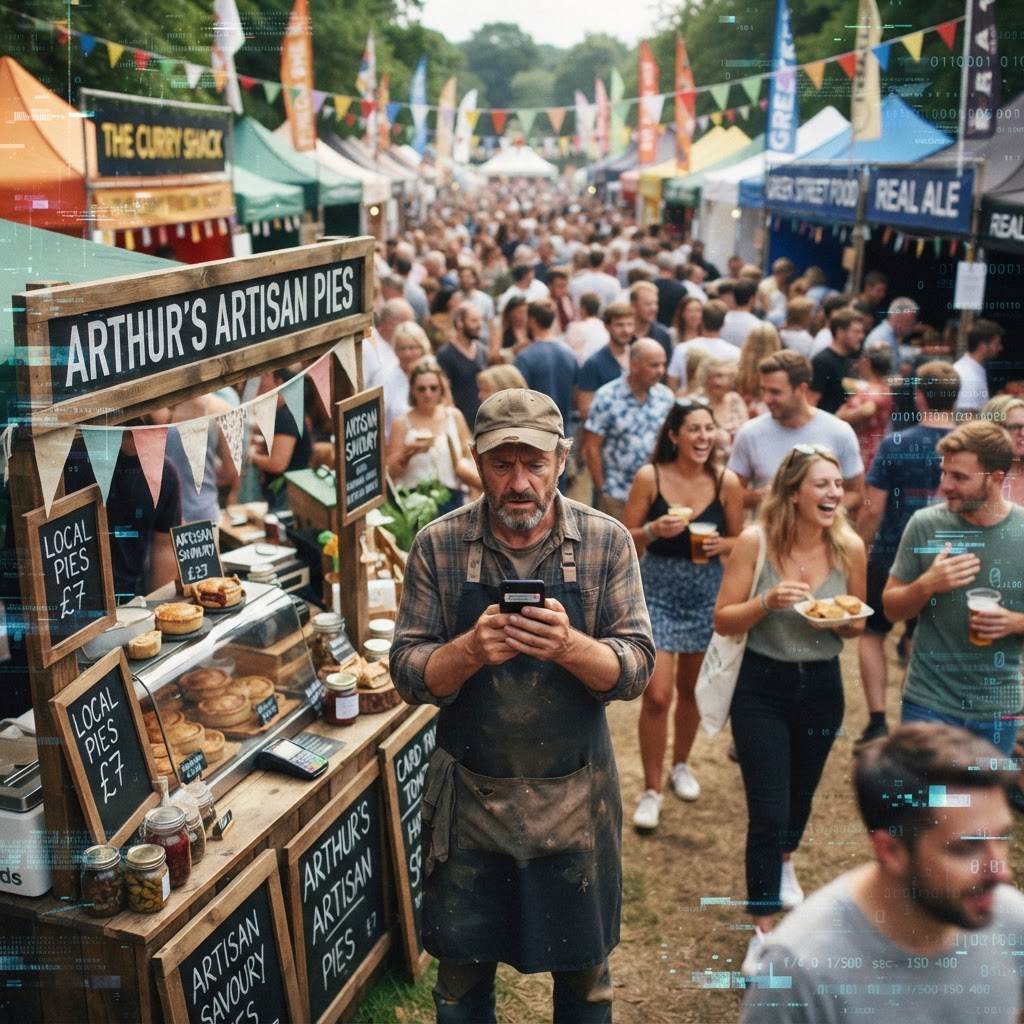
The Rise of Automated Extortion The ubiquity of the British food festival, a cornerstone of our seasonal cultural economy, is currently facing an unprecedented digital threat. A rigorous investigation by the BBC has exposed a concerted effort by criminal syndicates to weaponise artificial intelligence against independent traders and festival organisers. By deploying advanced language models and synthetic imagery, these bad actors are systematically eroding the trust that underpins the sector.
The mechanics of the scam are chilling in their precision. Unlike the crude phishing attacks of the past, these operations utilise AI to mirror the professional communications of established event logistics firms. Vendors are being contacted with highly personalised digital invoices and event registration prompts that are indistinguishable from legitimate correspondence. These deceptive documents appear to originate from the organisers of renowned regional food festivals, complete with hyper-realistic branding, authentic tone of voice, and genuine contact details scraped from publicly available social media channels.
An Economic Crisis for Independent Traders For the independent small business owner, the impact is devastating. Many artisan traders, operating on razor-thin margins, have found themselves paying significant 'pitch fees' into fraudulent accounts that appear identical to those of local council-sanctioned events. The sophistication of the AI-generated interface prevents the typical 'red flags'—such as grammatical errors or generic greetings—that once served as the primary line of defence for the cautious business owner.
Dr. Alistair Finch, a cybersecurity strategist at the Institute of Digital Resilience, suggests that this is merely the vanguard of a broader shift in criminal methodology. 'What we are witnessing is the democratisation of high-level fraud,' Dr. Finch noted. 'The barriers to entry for sophisticated cybercrime have been obliterated by accessible generative AI. We have moved from a world where one required technical genius to pull off a complex scam, to a reality where intent is the only limiting factor.'
Broadening Security Concerns This surge in event-related fraud arrives against a backdrop of increasing anxiety regarding the intersection of artificial intelligence and public safety throughout 2026. Government agencies have long warned that the rapid integration of AI into commercial sectors would inevitably attract opportunistic criminals. However, the specific targeting of the events industry—an ecosystem that relies heavily on personal trust and decentralised communication—has caught local authorities off guard.
Law enforcement officials are now urging festival organisers to adopt rigorous multi-factor authentication for all vendor communication and to move away from email-based invoicing in favour of secure, closed-loop payment portals. Yet, for many small-scale festivals operating with limited administrative staff and tight deadlines, these additional security hurdles may prove difficult to implement without alienating the very vendors they seek to protect.
“The barriers to entry for sophisticated cybercrime have been obliterated by accessible generative AI; we have moved from a world where one required technical genius to pull off a complex scam, to a reality where intent is the only limiting factor.”
The Long-term Implications for Local Economy The implications of these scams extend beyond immediate financial loss. There is a burgeoning concern regarding the reputational damage these fraudulent schemes cause to the events themselves. When a visitor discovers that their tickets, purchased through a mirrored 'official' website, are invalid, the resulting fallout often lands on the shoulders of the genuine organisers. This loss of public confidence could, if left unaddressed, lead to a decline in attendance for the very festivals that define the summer season for thousands of British families.
As we head into the autumn planning cycle, the message from the cybersecurity community is unequivocal: the days of relying on digital appearances are over. Without a fundamental shift in how the British events industry verifies its digital footprint, the vulnerability to AI-driven exploitation will only intensify. The challenge now lies in balancing the accessibility that makes our food festivals so inclusive with the stringent security measures required to survive in an era of automated deception.