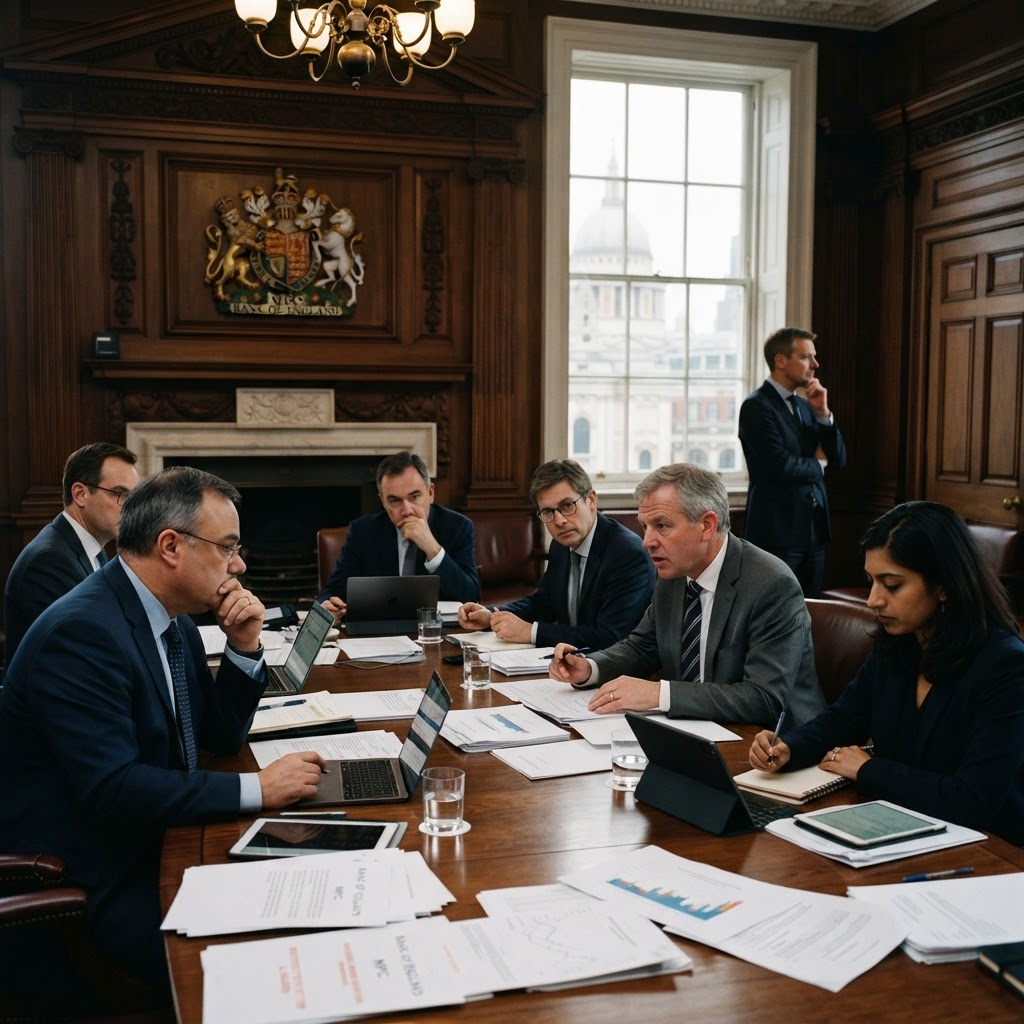
The Policy Crossroads As the autumn leaves begin to turn in the City of London, the atmosphere within the Bank of England’s Threadneedle Street headquarters is one of calibrated anticipation. Governor Andrew Bailey and his colleagues on the Monetary Policy Committee (MPC) are set to meet this week, with the prevailing market consensus pointing firmly toward a decision to keep the benchmark interest rate unchanged at 3.75 per cent. This figure, while representing the lowest level seen since early 2023, is viewed by many as the central bank's current equilibrium point in a volatile macroeconomic environment.
A Divided House The stability of this rate, however, masks a deeper fragmentation within the committee’s ranks. The previous vote saw a notable split, with six members opting for a hold while three dissenters pushed for a 0.25 percentage point increase. This divide reflects the acute tension between the desire to support a fragile UK recovery and the necessity of preventing inflation from becoming embedded in the wider economy. Whilst the headline rate of inflation has shown signs of moderation, the underlying pressures in the service sector remain stubbornly high, forcing policymakers to tread an incredibly narrow path.
The Weight of Quantitative Tightening Beyond the headline interest rate, the Bank is pressing ahead with its quantitative tightening programme. The reduction of its asset portfolio, aiming for a target of £489 billion, continues at pace. By actively selling and allowing government bonds to mature without reinvestment, the Bank is effectively pulling liquidity from the financial system—a secondary lever that is increasingly important as the era of cheap credit fades into memory. This process serves as a tightening of financial conditions that, when combined with the 3.75 per cent rate, ensures that borrowing costs for households and businesses remain elevated.
Hawkish Warnings Chief Economist Huw Pill has been vocal in recent weeks, offering a nuanced warning that the door to further hikes remains firmly unlocked. Mr Pill’s commentary has consistently emphasised that the Bank will react decisively should inflation shocks persist or, indeed, escalate due to global supply chain disruptions or energy market volatility. For businesses currently navigating high input costs, the signal is clear: the central bank is not yet ready to declare victory over the cost-of-living crisis. His stance represents a growing consensus among international peers that 'higher for longer' is not merely a slogan, but a necessary posture to ensure long-term price stability.
A Global Context The UK decision arrives at a pivotal juncture for the global financial order, coming just days before the US Federal Reserve and other major central banks are scheduled to provide updates on their own policy paths. As the pound fluctuates against the dollar, the Bank of England faces the additional pressure of maintaining sterling’s appeal while avoiding a recessionary outcome. Investors are looking for any indication of a shift in the Bank’s forward guidance, yet with geopolitical risks looming, the MPC is expected to adopt a wait-and-see approach, prioritising data-dependence over long-term commitments.
Ultimately, the challenge for Governor Bailey is to maintain credibility in the face of competing economic imperatives. If the Bank stays too tight for too long, the risk to economic output grows; if it eases too early, it risks squandering the progress made in the last eighteen months. For now, the decision to hold reflects a period of cautious consolidation, as Britain waits to see if the recent cooling in prices is merely a temporary reprieve or the start of a more sustained trend toward the two per cent target.