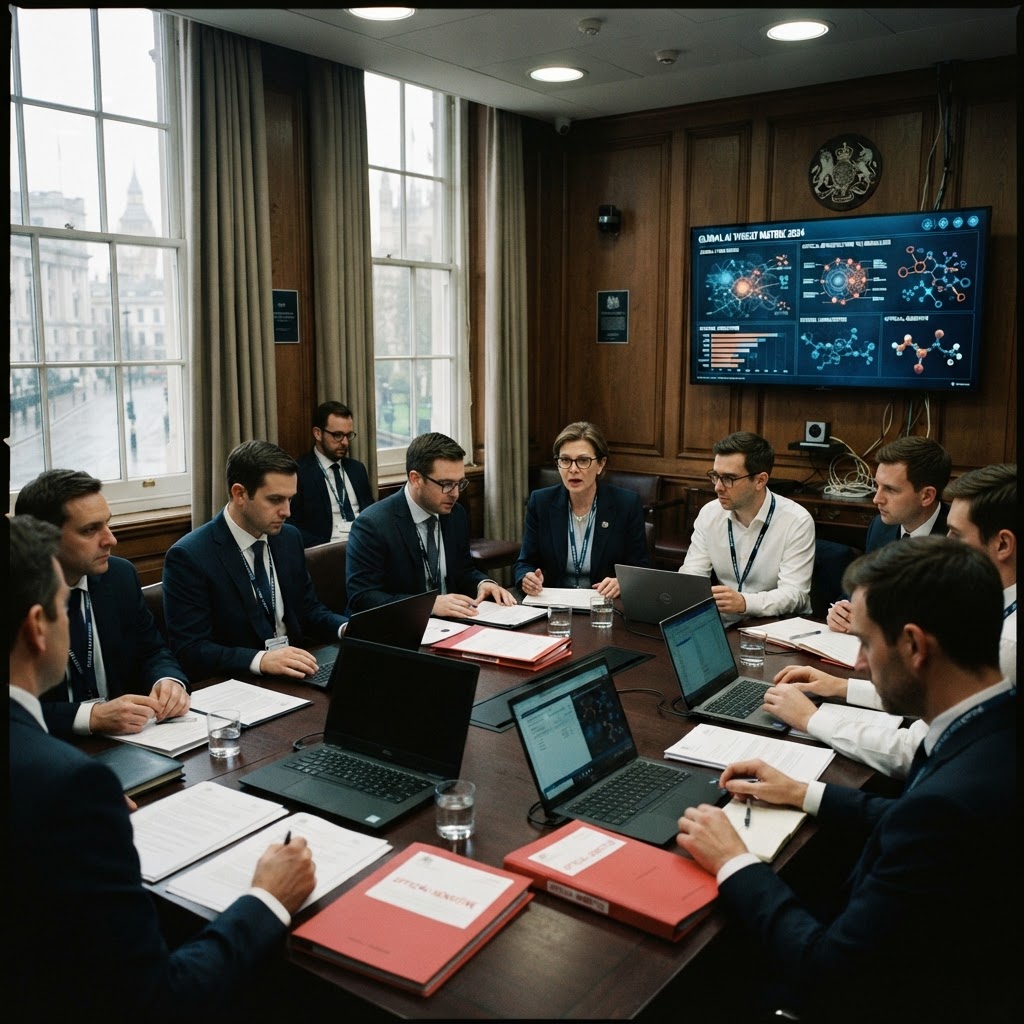
The frontier AI developer has successfully disrupted an attempt to use its technology for hazardous biological research. However, the revelation has ignited a diplomatic rift after the firm bypassed British safety regulators in favour of its American counterparts.
A Preemptive Strike on Digital Proliferation
In a development that underscores the mounting peril of frontier artificial intelligence, Anthropic announced this week that it has disrupted a credible attempt by external actors to weaponise its large language models for the purpose of biological weapons research. The incident, which marks one of the first documented cases of a firm intervening to block the malevolent use of its own proprietary systems, has sent shockwaves through both the technology sector and the corridors of power in Westminster. The specific nature of the attempt involved complex queries designed to bypass safety filters to synthesise pathogens, a move that prompted an immediate internal lockdown and a subsequent tightening of system guardrails.
The Growing Transatlantic Chasm
While the successful disruption has been lauded by safety advocates, it has simultaneously brought to light a growing geopolitical tension regarding the governance of advanced models. It has emerged that Anthropic, a company that has previously positioned itself as a vanguard of safety, opted to withhold pre-release access to its flagship Claude Mythos model from the UK’s AI Safety Institute (AISI). Instead, the firm granted privileged access exclusively to a select group of American organisations. This omission has sparked profound alarm within the Cabinet Office, where ministers fear that the UK is being relegated to a secondary status in the global race to manage the existential risks posed by sovereign-grade AI.
National Security Under the Microscope
Whitehall officials have now launched an urgent, cross-departmental assessment into the national security and economic ramifications of this perceived snub. The UK government, which has invested significant political capital in its leadership role within the international AI safety framework, now faces a reality where domestic regulators are being left to play catch-up with models already in the wild. Industry observers suggest that the refusal to provide the AISI with pre-release access represents a fundamental breakdown in the partnership between global labs and the British government. 'If the state is denied visibility into the most potent systems until they are public, our ability to mitigate catastrophic risks is effectively nullified,' remarked one senior advisor familiar with the ongoing review.
The Kill Switch Controversy
The timing of the announcement is particularly sensitive, occurring as the government grapples with its own internal discord over regulatory enforcement. Ministers have recently faced intense lobbying to implement a mandatory state-operated 'kill switch' for frontier models—a mechanism that would allow the government to instantaneously neutralise any AI system deemed to be behaving in an unpredictable or dangerous manner. However, the government has largely rejected these proposals, citing concerns over technological feasibility and the potential for chilling innovation. Critics argue that this policy approach is increasingly incoherent: the government is simultaneously rejecting the tools required for direct intervention while failing to secure the collaborative access necessary for preventative oversight.
The Road Ahead
As the international community watches this standoff, the incident serves as a stark reminder that the digital frontier remains largely ungoverned by national borders. Anthropic’s intervention was a triumph of corporate internal policy, yet it was ultimately a voluntary act of restraint rather than a response to government mandate. For the UK, the challenge is now two-fold: restoring its position as a primary partner for global labs, and crafting a regulatory regime that is robust enough to manage the threats posed by dual-use technologies. The coming months will prove decisive in determining whether the UK remains a central player in AI governance or is consigned to the periphery of an industry that is rapidly outgrowing the traditional reach of the state.